Ask ten creators with 20,000 followers what they charge for a Reel and you will get answers between 3,000 and 60,000 rupees. All of them think they are pricing normally. That spread is the entire problem: there is no published rate card for this industry, so most people price by vibes and a lot of them price low.
What follows are realistic benchmarks, plus the factors that decide where in a range you actually sit. Every number here is indicative for the Indian market and moves with category, engagement and how much the brand is asking for.
Why no standard rate exists
A brand is not buying a video. It is buying access to a specific group of people who trust a specific person. That is priced differently depending on who those people are, how much they buy, and how hard you are to replace.
Which is why a finance creator with 15,000 followers can charge more than a general lifestyle account with 80,000. The audience is worth more per head. Follower count is a rough proxy for value, and a bad one.
Benchmarks by tier
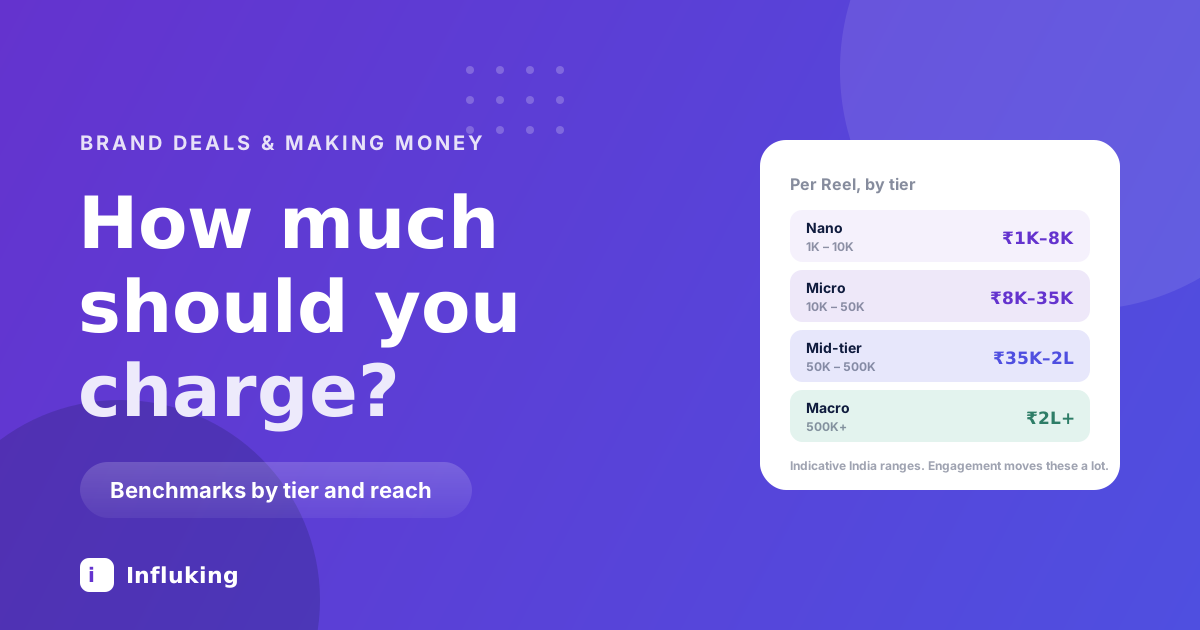
These are per-deliverable ranges for a single Instagram Reel in India, before add-ons. Treat the bottom of each range as a floor rather than a target.
- Nano, 1,000 to 10,000 followers. Roughly ₹1,000 to ₹8,000. Many first deals land near the bottom, and strong engagement in a clear niche justifies the top.
- Micro, 10,000 to 50,000. Roughly ₹8,000 to ₹35,000. This is where most working creators sit, and where the spread between underpriced and fairly priced is widest.
- Mid-tier, 50,000 to 500,000. Roughly ₹35,000 to ₹2 lakh. Agencies and structured campaigns start showing up here.
- Macro, 500,000 and above. ₹2 lakh upwards, with no meaningful ceiling once you reach genuine fame in a category.
A rough sanity check many creators use is a few hundred rupees per thousand followers for a single post. If your quote lands far below that, you are probably undercharging.
Rates are only half the picture, since how often you get booked and how much work each deal takes vary enormously by tier. Our comparison of nano, micro and macro earnings covers what actually reaches your account each month.
The better method: price on views
Follower-based pricing is increasingly out of date, because reach and followers have come apart. Plenty of accounts with 12,000 followers average 60,000 views per Reel, and plenty with 60,000 followers average 8,000.
So take your average Reel views over the last ten Reels and price per thousand views delivered. Brands understand this immediately, because it is how they buy every other kind of media. It also protects you when your reach outperforms your follower count, which is common now.
If your views swing wildly, quote against a conservative average and say so. Overpromising reach is how you end up doing a second post for free.
What each format is worth
Set your Reel price first, then price everything else relative to it.
- Reel or short video: your anchor, the highest single item.
- Carousel: around 60 to 70 percent of a Reel.
- Static post: around half.
- Story set of three frames: around a third. Price the set, never one frame.
- YouTube integration: priced separately and much higher, since the video keeps earning views for years. A dedicated video costs considerably more than a 60 second mention.
- Content only, no posting: when a brand wants footage for their own channels, charge production plus full usage. This is often more than a normal post, not less.
What moves your price up
- Engagement well above average for your size. The strongest argument you have.
- A high-value niche. Finance, tech, B2B, luxury, health and real estate all pay more than general lifestyle, because a conversion is worth more.
- Usage rights. Reuse on the brand's channels or in paid ads is a separate licence, not a bonus.
- Exclusivity. Blocking you from competitors costs you future income, so it costs them money.
- Whitelisting. Running ads from your handle borrows your identity, and should be a recurring fee.
- Heavy production. Scripted shoots, locations, actors, props.
- Rush timelines. Anything under a week displaces other work.
The add-on percentages for each of these are in our rate card guide, which covers how to write them into a document brands can buy from.
What justifies a lower price
Long-term retainers, where guaranteed monthly work is worth a discount. Bundled campaigns, where several deliverables at once reduce your setup time. Brands you would genuinely have bought from anyway. And your first two or three deals, where a portfolio piece has real value to you.
What does not justify a lower price: the brand saying the budget is small, exposure, the promise of future work, or a free product you did not ask for.
Gifted collaborations and barter
Barter is worth taking when the product is expensive and you wanted it, or when you have no portfolio yet. It is not worth taking as a habit, because it teaches brands that your work is free and because the product does not pay rent.
A reasonable rule: if the retail value of the product is well below your normal rate for the deliverables requested, it is not a fair trade. Say so politely and quote your rate. Plenty of brands with a gifting programme also have a paid budget they only mention when asked.
When a brand asks for your rate
Ask about the scope first. Deliverables, timeline, usage rights, exclusivity. You cannot price an unknown ask, and the questions make you sound like someone who has done this before.
If they ask for your budget before telling you theirs, it is fine to turn it around once: "It depends on the deliverables and usage. What range are you working with for this campaign?" Many have a number already. If they insist, quote for the scope you know, and say clearly that usage rights and exclusivity are priced separately.
Then say the number and stop talking. The urge to justify or immediately discount is the most expensive habit in this business.
Signs you are undercharging
- Every brand says yes immediately with no negotiation.
- You are turning down work because you have no time, at prices that do not add up to a living.
- Your rate has not moved in a year while your reach has grown.
- You feel resentful during the shoot. That feeling is usually accurate.
- You are quoting less than a freelance videographer would charge for the same production, even before the audience is counted.
Raising your rates
Review quarterly and raise when your reach, engagement or results have genuinely improved. Results are your strongest argument: "the last campaign drove 640 clicks and the shade sold out" beats any follower number. Apply new prices to new enquiries, honour existing quotes, and tell repeat clients before their next booking rather than surprising them on an invoice.
Your numbers only work as an argument if a brand can see them, which is what a media kit is for, and the rate itself only matters if the money actually arrives. Influking runs the brief, approvals and payment through one place so the agreed rate is the rate that lands. If you have not landed a paid deal yet, start with our guide to getting your first brand collaboration.
One last note on all these numbers: they are ranges observed across the Indian market, not a published standard, and they date quickly. Use them to check whether your instinct is roughly sane, then price on your own engagement, niche and the actual size of the ask.